Here goes adding this neat little app- the mere sight of the word 'code' makes me feel all technically inadequate, but let's follow the instructions and see how it works. . .
Done. It works a treat. Now visitors to this blog can have audio chats. Right click in the application opens up some settings- checking 'reduce echo' does exactly that.
Saturday, 11 April 2009


Friday, 10 April 2009
My success is your success
Working in my home town of Sheffield has brought back some strong memories of being a pupil. And some guilt about missed opportunities.
Looking back, the focus was the individual, with little status attached to helping others out. I remember as a sixth former volunteering to be a paired reader for a younger pupil in school. We would sit in the library and read for half an hour in our lunch break. I'd listen, offer help and say well done!- I didn't receive any training to do the task, but I guess was using a kind of 'Pause, Prompt, Praise' methodology.
At the time I have to be honest, it didn't feel much of an accomplishment. As I reflect on my time at secondary school, it was probably the most important thing I did during my whole time there.
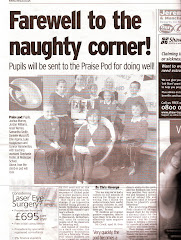
And this is our challenge; to reward and recognise a far wider range of behaviours and achievements so that every aspect of a young person can shine through. Reminds me of the pupil sent to praise pod at St. Joseph's primary school for putting a smile on the teacher's face. And as we know it takes less muscles to smile than grimace. . .
Looking back, the focus was the individual, with little status attached to helping others out. I remember as a sixth former volunteering to be a paired reader for a younger pupil in school. We would sit in the library and read for half an hour in our lunch break. I'd listen, offer help and say well done!- I didn't receive any training to do the task, but I guess was using a kind of 'Pause, Prompt, Praise' methodology.
At the time I have to be honest, it didn't feel much of an accomplishment. As I reflect on my time at secondary school, it was probably the most important thing I did during my whole time there.
And this is our challenge; to reward and recognise a far wider range of behaviours and achievements so that every aspect of a young person can shine through. Reminds me of the pupil sent to praise pod at St. Joseph's primary school for putting a smile on the teacher's face. And as we know it takes less muscles to smile than grimace. . .
Tuesday, 17 March 2009
Richard Villa on inclusion
Magna, the ex-steelworks turned conference venue hosted Richard Villa for three days of high octane passion and inspirational sessions. Check Richard's website here. Anyone coming away untouched was probably not there in the first place. Which is the subject of another blog altogether. . .
Two main themes for me were; first, start with student's strengths; spend more time assessing qualities and be creative in adapting the pedagogy to fit. If we get it right for students with 'additional' needs (whatever that term really means??) we will inevitably make it better for every student. In time 'additional' becomes 'personal' and as such applies to every student, not simply those who slide off the bell-curve.
And second, involve young people. Friday had such a different energy provided by some wonderful students from Parkwood Academy. The 'Pride' group gave me another perspective and the three pupils representing the 'Leadship Academy' (see pic) were simply an inspiration.

Thanks to Richard for his energy, encouragement but most of all his acknowledgement of Friday's guests. I, for one, will keep many messages in mind and will endeavour to work in a more inclusive fashion from today onwards.
Two main themes for me were; first, start with student's strengths; spend more time assessing qualities and be creative in adapting the pedagogy to fit. If we get it right for students with 'additional' needs (whatever that term really means??) we will inevitably make it better for every student. In time 'additional' becomes 'personal' and as such applies to every student, not simply those who slide off the bell-curve.
And second, involve young people. Friday had such a different energy provided by some wonderful students from Parkwood Academy. The 'Pride' group gave me another perspective and the three pupils representing the 'Leadship Academy' (see pic) were simply an inspiration.

Thanks to Richard for his energy, encouragement but most of all his acknowledgement of Friday's guests. I, for one, will keep many messages in mind and will endeavour to work in a more inclusive fashion from today onwards.
Friday, 6 March 2009
Therapeutic education, inclusion and neuroscience. . .

Thought provoking session at Sheffield University this morning; messages of trusting in our children's creativity and trusting in our children to make their own choices emerged through strands of SEAL, brain development and some hard-hitting global facts about exclusion. Made me feel ashamed and inspired at the very same time. Thanks to all three speakers and a special thank you to Professor Roger Slee for sharing his 'Happy School' photo from India; surely a model for all schools around the world!
Tuesday, 3 March 2009

After the first week of praise pod sessions at Oakwood the winning reason young people are being sent is. . . .
'support / kindness / understanding to others'
SEAL in action and lots of positive vibes in the library.
Ooops, good job i checked- 'vibes' came up as 'vices' on predictive! Must get a phone with querty keyboard.
Tuesday, 24 February 2009
Language and attitudes, old and young. . .
Here's a few things to ponder:
71% of press coverage of young people in Britain is negative (audit commission 2009)
This is a global issue; by 2025, one in three Japanese will be elderly. We all know that young people hold the key to helping; whether this is through hands-on care or developing technologies, medicines or creative solutions to tomorrow's dilemmas. So shouldn't older people be doing everything in their power to engage with and enlist the support of young people. It would make sense, surely and be equally mad to demonise them. Yet we do exactly this. Through the media and in our everyday language. Take a look at the first part of this teachers TV clip and listen for the word 'offender' - we are talking about 11 year old children. The very people who, when today's 45 year-old teacher retires will be 31.
I'm not critisicing the staff in the video; the language is part of the fabric of organisations, and it's been there many years. Like the word 'patient' and 'case' in healthcare. Language is so very powerful. More than we recognise. Mike Temple's excellent blog on behaviour management includes a fascinating insight into primary pupil's perceptions; in response to a simple question, "What is love?" one 4-year old replied,
"When someone loves you, the way they say your name is different. You just know that your name is safe in their mouths."
Billy- age 4
It's hard to convey such unconditionality when you're talking to 'an offender' and they know it. Particularly the very children with the greatest needs.
I don't think the answer lies solely in top-down strategies, rather action on the ground- such as nursing home residents spending time working with young people on community projects (listen to Ken Robinson's example from Tulsa, Oklahoma 19:50 into the clip, but it's all quality) and universities developing websites for older people (IBM project, Japan)
Technology offers such an exciting opportunity to share experiences and build trust and confidence not only in the technology itself, but in each other as people.
Here's looking forward to Praise Pod being another vehicle to unite and inspire.
71% of press coverage of young people in Britain is negative (audit commission 2009)
Young people are technically more adept and confident than their parents. The term 'Digital Native' recognises this generation born into a digital age.
The developed world has an ageing population
We teach mainly in single year age bands
It seems a crying shame that the 'us and them' state of play is stifling bridge-building between young and old (and anyone in between for that matter) The Guardian July 2008 reported: "England's local authorities are not doing enough to make sure the ageing population has enough interesting and worthwhile things to do.
We teach mainly in single year age bands
It seems a crying shame that the 'us and them' state of play is stifling bridge-building between young and old (and anyone in between for that matter) The Guardian July 2008 reported: "England's local authorities are not doing enough to make sure the ageing population has enough interesting and worthwhile things to do.
The report says most councils are not ensuring older residents can easily find out about areas such as volunteering, leisure and social activities, learning opportunities and transport. It highlights some excellent projects, such as a community radio station run by and aimed at older people in west Cornwall, but suggests that areas with the biggest populations of elderly people are often the worst for making sure they have something to do.
Michael O'Higgins, the chairman of the Audit Commission, said: "By 2029 nearly 40% of England's population will be over 50. These are active people, anxious to stay independent as long as possible.
"Ex-punk rockers and Rolling Stones fans are not going to be happy with a cup of tea and daytime TV."
The report says that by 2009 almost 18 million people in England will be aged 50 or over around a third of the population. In 2029 this will have risen to 23m.
It also flags up the areas with the highest and lowest proportions of over-50s. By next year 53% of people in West Somerset will be over 50 and by 2029 this will rise to 63%. Four other south-west districts are in the top 10.This is a global issue; by 2025, one in three Japanese will be elderly. We all know that young people hold the key to helping; whether this is through hands-on care or developing technologies, medicines or creative solutions to tomorrow's dilemmas. So shouldn't older people be doing everything in their power to engage with and enlist the support of young people. It would make sense, surely and be equally mad to demonise them. Yet we do exactly this. Through the media and in our everyday language. Take a look at the first part of this teachers TV clip and listen for the word 'offender' - we are talking about 11 year old children. The very people who, when today's 45 year-old teacher retires will be 31.
I'm not critisicing the staff in the video; the language is part of the fabric of organisations, and it's been there many years. Like the word 'patient' and 'case' in healthcare. Language is so very powerful. More than we recognise. Mike Temple's excellent blog on behaviour management includes a fascinating insight into primary pupil's perceptions; in response to a simple question, "What is love?" one 4-year old replied,
"When someone loves you, the way they say your name is different. You just know that your name is safe in their mouths."
Billy- age 4
It's hard to convey such unconditionality when you're talking to 'an offender' and they know it. Particularly the very children with the greatest needs.
I don't think the answer lies solely in top-down strategies, rather action on the ground- such as nursing home residents spending time working with young people on community projects (listen to Ken Robinson's example from Tulsa, Oklahoma 19:50 into the clip, but it's all quality) and universities developing websites for older people (IBM project, Japan)
Technology offers such an exciting opportunity to share experiences and build trust and confidence not only in the technology itself, but in each other as people.
Here's looking forward to Praise Pod being another vehicle to unite and inspire.
Sunday, 22 February 2009
children see, children do
Let everyone first get their house in order before criticising children for their failings. I'd give this video a '12' rating for the last few seconds' content, so view responsibly.
Watch Children_See.wmv in Family Videos | View More Free Videos Online at Veoh.com
Watch Children_See.wmv in Family Videos | View More Free Videos Online at Veoh.com

Wednesday, 18 February 2009


It's widely regarded that the more aspects of a young person we see as positive, the better their mental health, and the better their life in general. So here I am at Broom Valley primary school. I'm early for a meeting so I look round the lobby and see certificates, values (more on those later) and a fantastic board of photos showing the wide variety of bilingual students in the school. Celebrating diversity in its most real sense.
As for the school's values, they are agreed through school council and more importantly lived and breathed within school. You fancy a job here? (I personally would recommend applying) well the first value to hit you in the face is 'we do not shout' - if you think it's ok to do so then fine, but not here. Ply your trade elsewhere and save your modeling of lack of control for another cohort. It is widely recognised that shouting indicates a loss of control that helps no-one.
Unsurprisingly, there are too many positives going on at Broom Valley to take the attention. The odd fall from grace becomes insignificant. Far from 'the slippery slope' it is simply a one-off exception to the rule. After all who hasn't on occasion told a lie. . .
As with any effective system, Broom Valley's doesn't sit on a shelf- its reward tokens are the first thing you see on entering the school and the very same rewards are shining in the eyes of the pupils who simply love being in school.
And so to the parameters of the praise pod- what are the keywords to get attention? fidgeting- No. Inquisitive challenge - yes. Shouting; not even a chance. There's simply too much going on that is positive.
Sunday, 25 January 2009
Been listening to Sir Ken Robinson's talk about creativity and passing it on to colleagues far and wide. Click here to go to the talk, as hosted by TED Here's the full web address:
http://www.ted.com/index.php/talks/ken_robinson_says_schools_kill_creativity.html
just in case this link doesn't work, or for easy cut-and-pasting. Enjoy!
As well as fully backing Ken's sentiments that the challenge for 21st C schools is to recognise and celebrate more aspects of young people than we do at present, I've also come to believe that creativity happens around the edges of teams, organisations and disciplines, and it's no suprise that I first heard of Ken Robinson via Mark Waddington, ITV Local programme manager, rather than a colleague from the local educational authority. Click here for Mark's blog. and may many creative collisions occur. . .
http://www.ted.com/index.php/talks/ken_robinson_says_schools_kill_creativity.html
just in case this link doesn't work, or for easy cut-and-pasting. Enjoy!
As well as fully backing Ken's sentiments that the challenge for 21st C schools is to recognise and celebrate more aspects of young people than we do at present, I've also come to believe that creativity happens around the edges of teams, organisations and disciplines, and it's no suprise that I first heard of Ken Robinson via Mark Waddington, ITV Local programme manager, rather than a colleague from the local educational authority. Click here for Mark's blog. and may many creative collisions occur. . .
The value of praise?
Just recently met with a primary head who freely admits he can't think of a better way to spend his time than giving stickers to pupils and hearing about their successes. Or at least a more rewarding way of spending his time. And walking into the school you can simply feel the warmth and care this belief engenders, with that wonderful sound of happy children as a soundtrack to the day.
Yet budget management, strategy, policy, protocols, standards, target-setting and monitoring are all part of a modern school. I'm sure for many these pressures are so intense that it feels there simply isn't enough time to spend personally congratulating individual children. Sure, leadership is about more than saying well done to all and sundry, but it has to be central to all other parts of school life. Thank you Alan for keeping that flame burning brightly; it's reflected in the laughter and feelings of self-worth of so many children.
Yet budget management, strategy, policy, protocols, standards, target-setting and monitoring are all part of a modern school. I'm sure for many these pressures are so intense that it feels there simply isn't enough time to spend personally congratulating individual children. Sure, leadership is about more than saying well done to all and sundry, but it has to be central to all other parts of school life. Thank you Alan for keeping that flame burning brightly; it's reflected in the laughter and feelings of self-worth of so many children.
Oakwood Technology College
A big well done to all the staff and pupils at Oakwood for organising their school and setting up Praise Pod. Without individuals willing to take risks there would never be leaders to follow, so I take my hat off to Clare and the team for their belief in change. Looking forward to hearing about the results
Monday, 27 October 2008
Bafta stars

Well done Jack and Codey. What a team! Thanks to everyone who visited the praise pod and kept us all busy interviewing. Even grown ups can feel proud for simple things like ironing their own shirt. . .
Tuesday, 21 October 2008
Dinnington plays a mobile blinder

Dinnington Community primary school must have the most uplifting Friday assembly on the planet. My personal favourite has to be "Who's played a blinder?" which is a reward for staff each week. Parents too were awarded certificates for completing a maths course alongside their children- we whisked one or two mums off to the praise and they took home clips of their children on their mobiles. Great to see the pride on their faces.
For now bluetooth technology has many benefits over data contracts for this. It does rely on parents physically coming into school, but hey, when school's such a buzzy place as this why not join the fun
Handheld Learning 2008

I have to say a big thank you to all the handheld team, the Promethian team and to the brewery hosts; they made me feel welcome and couldn't have been more helpful in sorting out technical challenges and much much more. And thanks too to Tom, Evelyn and Andy in Rotherham- pic is of the live link that we didn't quite make happen this time.
Whilst there were many stimulating presentations the real stars of the show were those in the background. Thanks everyone; you know who you are.
Tuesday, 30 September 2008
Peer Listeners

Sept. 29th. Thanks to everyone at Dinnington Comprehensive school for their warm welcome. What a nice touch having a press cuttings book in reception to flick through. My favourite had to be the pupil who administered CPR at the local ice rink to save an elderly woman's life. How impressive is that!
As schools aim for specialist status I wonder which will be the first to gain specialism in empathic relationships?
Anti-bullying
Sept 24th, Leeds. Thanks to John for the invite to present praise pod and it was great to hear of initiatives making a real difference. Circle Time, SEAL, Conflict resolution all working well to create climates where there is space to stop and listen before reacting to situations.
Time to understand another person's perspective. Sounds like it should be on everyone's personal development plan to me.
Regional ICT network.
 11th Sept, Park Plaza, Leeds. Regional ICT advisors network meeting. There was a strong broadcasting theme- this slide is a quote from a student at Thorn Park school for the deaf; there's something very affirming when someone else thinks what you think is worth publishing.
As if young people aren't doing this already! (Bebo, facebook, myspace etc. . . )
In this media revolution the tools are already out there so everyone has a voice. Thanks to Mark Waddington from ITV Local for his thought-provoking talk, to Barrie for the invite, and to Tim for his warm welcome and kind words.
Wednesday, 6 August 2008
Learning for all ages
A big thank you to Yas and Chel from Netherfield Court for their warm reception and enthusiasm in getting involved in Praise Pod. I'm sure residents and staff will enjoy meeting pupils from local schools and learning from each other about what life is like when you're 9 and 90. A lot will have changes but I bet a lot is just the same. . .
Thursday, 10 July 2008
Interview over the net
 A big thank you to Stephen Heppell for taking the time to interview today's praise pod visitors at Rawmarsh Ashwood primary school today. It always feels special when someone gives you their time and attention; in this busy world it has to be the most precious thing we can give. Today we heard about teamwork, sharing, leadership, kindness, hard work, a great attitude to learning and wonderful achievements from our visitors. No wonder everyone felt so proud. And rightly so.
Tuesday, 8 July 2008
My favourite teacher is . . .

Magna was the venue for this BSF event. A thought-provoking keynote from Marcus Orlovsky kicked things off nicely, followed by a pupil presentation about their favourite teachers.
An excellent workshop from Clifton and Wingfield teachers sharing ideas from Sweden gave us lots to think about.
Key messages for me were; trust in our young people. Listen to each other. Don't look back too much, don't be afraid or look to blame and finally let's enjoy the process.
Subscribe to:
Posts (Atom)

 Posts
Posts

